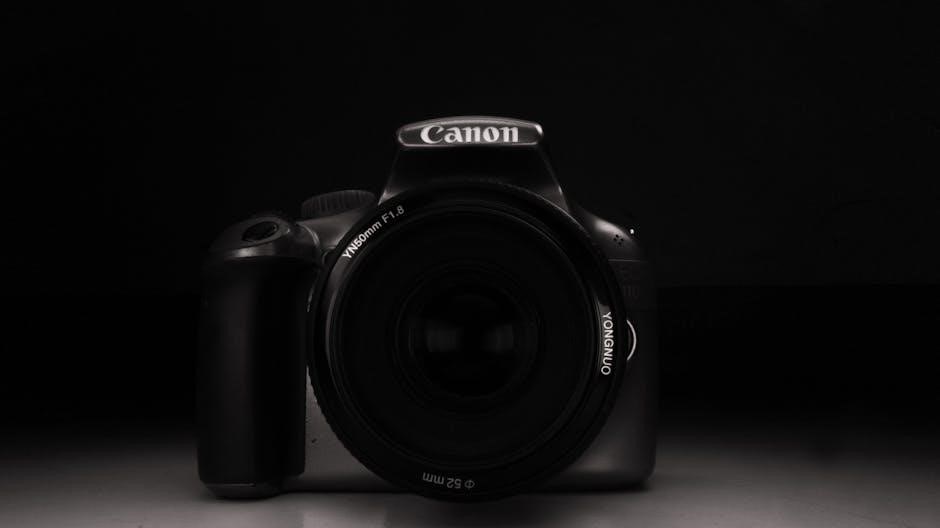
The Canon EOS Rebel T3, released alongside the T3i, represents an accessible entry point into DSLR photography, offering a balance of features and affordability for beginners.
What is the Canon EOS Rebel T3?
The Canon EOS Rebel T3 (also known as the EOS 600D outside of North America) is an entry-level Digital Single-Lens Reflex (DSLR) camera introduced by Canon in 2011. It serves as a more affordable alternative to the slightly higher-spec T3i model. This camera boasts a 12.2-megapixel APS-C CMOS sensor and Canon’s DIGIC 4 image processor, delivering respectable image quality for both beginners and enthusiasts.
It’s designed to bridge the gap between point-and-shoot cameras and more advanced DSLR systems, offering greater control over photographic settings and the flexibility of interchangeable lenses. The T3’s lightweight design and user-friendly interface make it an appealing choice for those new to DSLR photography.
Target Audience for the T3
The Canon EOS Rebel T3 primarily targets individuals taking their first steps into the world of DSLR photography. It’s ideal for beginners who desire more control and image quality than typical point-and-shoot cameras offer, without the complexity or expense of higher-end models.
Families, students, and hobbyists seeking a versatile camera for everyday snapshots, portraits, and travel photography will find the T3 a suitable option. Its affordability makes it accessible, while its interchangeable lens system allows for future expansion as skills develop. It appeals to those wanting to learn photography fundamentals.
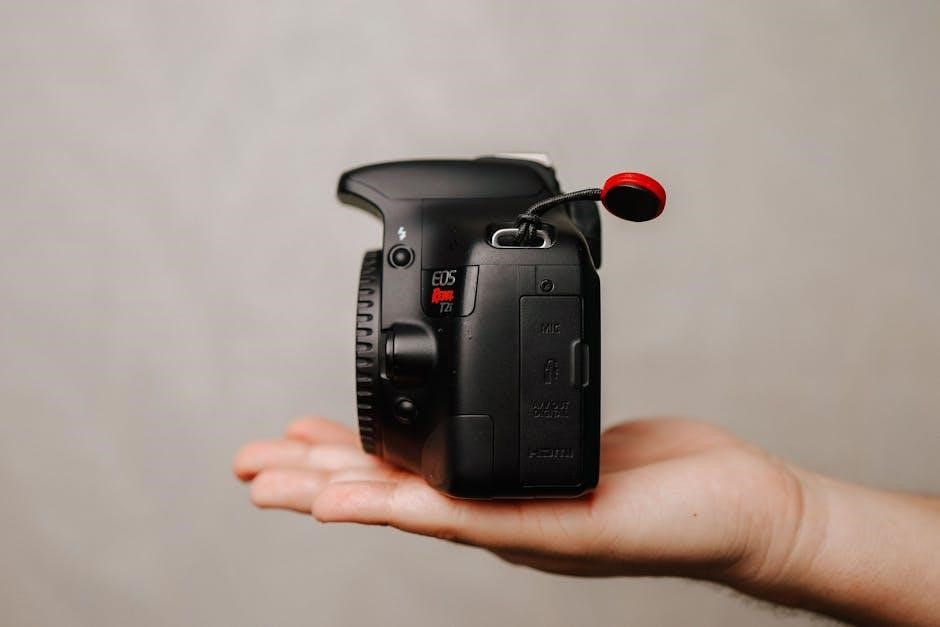
Key Features and Specifications
The Rebel T3 boasts a 12.2-megapixel sensor, DIGIC 4 image processor, and 1080p video recording, offering a solid foundation for aspiring photographers and videographers.
Sensor and Image Processor
At the heart of the Canon EOS Rebel T3 lies a 12.2-megapixel APS-C CMOS sensor, a step up from the earlier XS model. This sensor size is crucial, as it strikes a balance between image quality and affordability, allowing for pleasing background blur and good low-light performance. Paired with this sensor is Canon’s DIGIC 4 image processor, responsible for handling image processing tasks like noise reduction, color reproduction, and overall image clarity.
The DIGIC 4 processor contributes to the camera’s improved ISO capabilities and faster operation, enhancing the shooting experience for both stills and video. This combination delivers a noticeable improvement in image quality compared to older Canon models, making it a capable performer for entry-level users.
Megapixel Count and Image Quality
The Canon EOS Rebel T3 boasts a 12.2-megapixel sensor, providing ample resolution for most everyday photography needs, including prints and online sharing. While not matching the megapixel counts of higher-end models, 12.2MP is sufficient for detailed images with good clarity. Image quality is noticeably improved over previous entry-level Canons, thanks to the combination of the sensor and DIGIC 4 processor.
Users can expect vibrant colors, acceptable dynamic range, and manageable noise levels, especially at lower ISO settings. The T3 delivers a solid image quality experience for beginners venturing into the world of DSLR photography, offering a clear upgrade from point-and-shoot cameras.
DIGIC 4 Image Processor
The Canon Rebel T3 utilizes the DIGIC 4 Image Processor, a crucial component enhancing overall camera performance. This processor facilitates faster image processing speeds, contributing to quicker shot-to-shot times and improved responsiveness. It also plays a key role in noise reduction, resulting in cleaner images, particularly at higher ISO settings.
The DIGIC 4 processor enables features like Face Detection Live View, aiding in achieving sharper portraits. Furthermore, it supports HD video recording, a notable addition for its time. It’s a significant upgrade from older processors, delivering a smoother and more efficient shooting experience for the user.

Camera Controls and Interface
The Rebel T3’s controls are designed for simplicity, featuring a mode dial for selecting shooting modes and a straightforward button layout for essential functions and menu navigation.
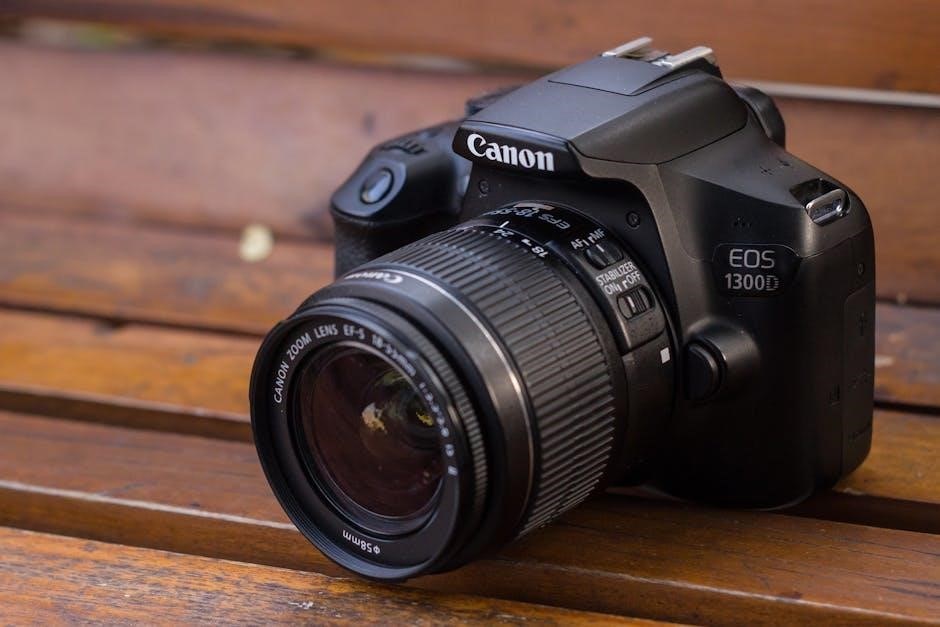
Mode Dial and Shooting Modes
The Canon EOS Rebel T3’s mode dial provides access to a variety of shooting options, catering to both beginners and those seeking more creative control. Key modes include the fully automatic ‘Scene Intelligent Auto’ which intelligently selects settings, and several scene modes like Portrait, Landscape, and Sports.
For users wanting manual control, Program (P), Aperture Priority (Av), Shutter Priority (Tv), and fully Manual (M) modes are available. Creative modes, such as Flash Off, and a custom User Defined mode, further expand shooting possibilities. The dial’s clear labeling and intuitive arrangement contribute to a user-friendly experience, allowing photographers to quickly select the desired shooting style.
Button Layout and Functionality
The Canon EOS Rebel T3 features a relatively straightforward button layout, prioritizing ease of use for new DSLR users. The main controls, including the shutter button, mode dial, and directional pad, are logically positioned for comfortable operation. The ‘Set’ button confirms selections, while the ‘Q’ button provides quick access to frequently used settings.
A dedicated Live View button initiates live preview on the LCD screen. Though not overly complex, the button arrangement allows efficient navigation through menus and adjustments, enabling photographers to quickly adapt to different shooting scenarios without extensive menu diving.
Menu System Navigation
The Canon EOS Rebel T3’s menu system, while functional, can initially appear somewhat daunting to newcomers. Organized into distinct tabs – Shooting, AF, Setup, and others – it requires familiarization to efficiently locate specific settings. The menu structure isn’t the most intuitive compared to newer Canon models, but it’s logically arranged once understood.
Navigating the menus utilizes the directional pad and ‘Set’ button. Canon’s manual is crucial for understanding each option. Though not touchscreen-enabled, the system is responsive, allowing for relatively quick adjustments to camera parameters;

Shooting with the Rebel T3
Mastering the Rebel T3 involves understanding core photographic principles like ISO, aperture, and shutter speed, enabling creative control over image capture and quality.
Understanding ISO Settings
ISO sensitivity on the Canon EOS Rebel T3 dictates your camera’s sensitivity to light. Lower ISO values (like 100 or 200) are ideal for bright conditions, producing cleaner images with minimal noise. As light diminishes, increasing the ISO (400, 800, 1600, or higher) allows for faster shutter speeds to prevent blur, but introduces digital noise – graininess – into the image.
The T3’s improved ISO capabilities, compared to its predecessor, offer better performance at higher settings. Experimenting with ISO is crucial; find the sweet spot where you balance brightness and acceptable noise levels for your specific shooting scenario. Remember, higher ISOs are useful for action shots or low-light environments, but prioritize lower settings whenever possible for optimal image quality.
Aperture and Shutter Speed Control
Aperture, controlled by the f-stop, regulates the lens opening, impacting both light intake and depth of field. A wider aperture (lower f-number like f/3.5) creates a shallow depth of field, blurring the background – ideal for portraits. A narrower aperture (higher f-number like f/16) yields greater depth of field, keeping more of the scene in focus – suited for landscapes.
Shutter speed determines how long the sensor is exposed to light. Faster shutter speeds freeze motion, while slower speeds allow more light in but can cause blur. Mastering the interplay between aperture and shutter speed is fundamental to achieving proper exposure and creative control over your images with the Rebel T3.
Focusing Modes and Techniques
The Canon EOS Rebel T3 offers several focusing modes. One-Shot AF is best for stationary subjects, locking focus when the shutter button is half-pressed. AI Servo AF continuously tracks moving subjects, adjusting focus as they move – perfect for sports or wildlife. Manual Focus (MF) allows precise control, useful in low light or for specific creative effects.
Utilize the nine autofocus points for varied compositions. Single-point AF offers precision, while automatic selection lets the camera choose. Practice back-button focus for separating focusing from the shutter release, enhancing control.

Video Recording Capabilities
The Rebel T3 captures video at 720p resolution, offering a stepping stone into filmmaking for beginners, though lacking advanced features found in later models.
Video Resolution and Frame Rates
The Canon EOS Rebel T3 primarily records video in 720p High Definition, specifically at 1280×720 pixels. It supports frame rates of 24, 25, and 30 frames per second (fps), providing some flexibility for different shooting styles and desired looks. While not offering the full 1080p resolution found in its more advanced sibling, the T3i, the 720p output is still suitable for basic video projects and sharing online.
The camera utilizes a dedicated movie button for quick access to video recording mode. Keep in mind that continuous recording time is limited to around 29 minutes and 59 seconds due to file size restrictions.
Manual Video Controls
The Canon EOS Rebel T3 offers a limited degree of manual control during video recording. Users can adjust exposure compensation, but full manual control over aperture, shutter speed, and ISO is not directly available while filming. This means achieving precise control over depth of field or motion blur requires pre-setting these parameters before initiating video capture.
While autofocus is available, it can sometimes struggle with tracking moving subjects smoothly. Manual focusing is possible, offering greater precision, but requires practice and a steady hand. Audio levels can be monitored, but there’s no dedicated headphone jack for real-time audio monitoring.
Audio Recording Options
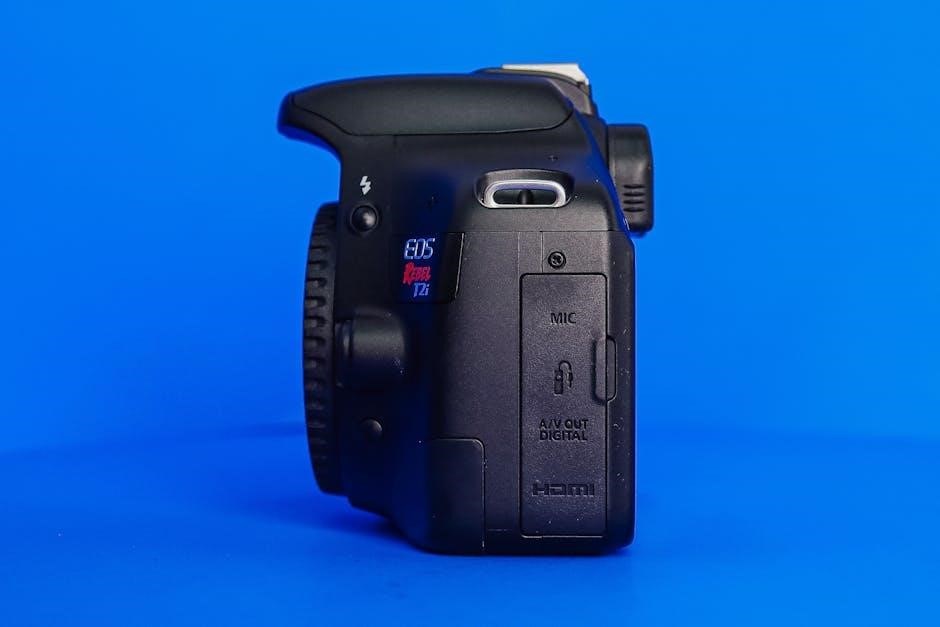
The Canon EOS Rebel T3 features built-in mono audio recording, utilizing the camera’s integrated microphone. While functional for basic video projects, the audio quality is noticeably limited, susceptible to wind noise and ambient sounds. Unfortunately, the T3 lacks a dedicated microphone input jack, preventing the connection of external microphones for significantly improved sound.
Users can adjust audio levels manually within the camera’s menu, but real-time audio monitoring isn’t available due to the absence of a headphone port. This makes precise audio adjustment challenging, often requiring post-production editing to enhance clarity.
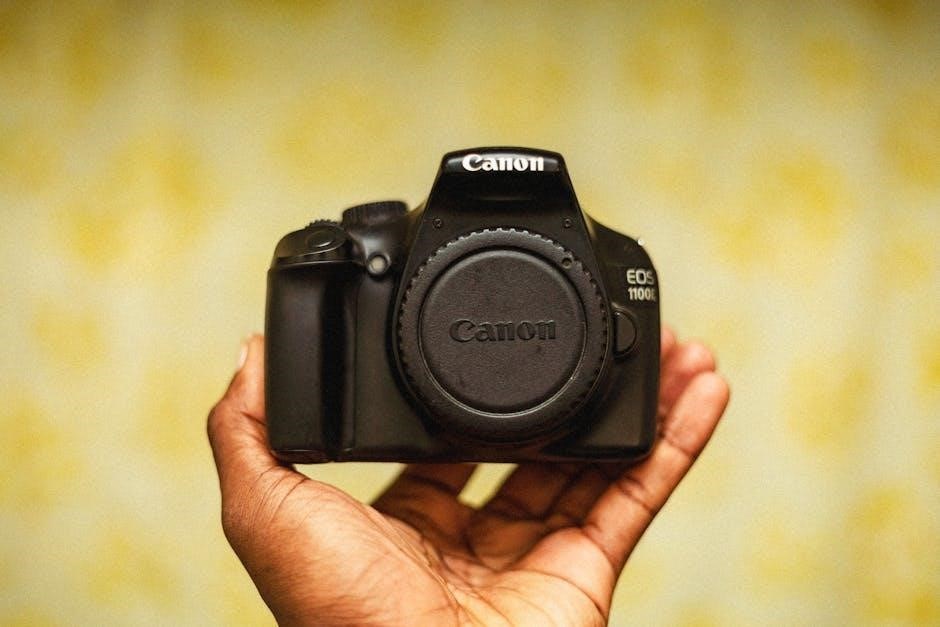
Essential Accessories
To maximize the Rebel T3’s potential, consider compatible lenses, SD memory cards for storage, and a reliable battery charger for extended shooting sessions.
Lenses Compatible with the T3
The Canon EOS Rebel T3 utilizes the Canon EF and EF-S lens mounts, providing a vast selection of lenses to choose from. EF lenses offer full-frame compatibility, while EF-S lenses are designed specifically for APS-C sensor cameras like the T3, generally being more compact and affordable.
Kit lenses, often bundled with the camera, are a great starting point. Beyond that, explore options like wide-angle lenses for landscapes, telephoto lenses for wildlife, and macro lenses for close-up photography. Third-party lens manufacturers, such as Sigma and Tamron, also offer compatible lenses, expanding your choices and potentially offering cost savings. Remember to check lens compatibility before purchasing.
Memory Cards and Compatibility
The Canon EOS Rebel T3 is compatible with SD and SDHC memory cards, crucial for storing your photos and videos. Capacity is a key consideration; larger cards allow for more storage, reducing the need for frequent swapping. Speed is equally important, particularly for video recording and continuous shooting.
Look for cards with a Class 10 or UHS-I rating for optimal performance. While the T3 doesn’t fully utilize the fastest UHS-II speeds, a faster card will still improve write speeds. Regularly format your cards in the camera to maintain optimal performance and prevent potential issues.
Battery and Charger Information
The Canon EOS Rebel T3 utilizes the Canon LP-E10 battery, providing power for your photographic adventures. Battery life is a respectable, though dependent on shooting style and features used. Expect around 500 shots on a full charge under typical conditions. Canon includes the LC-E10 charger with the camera, designed specifically for the LP-E10.
It’s advisable to invest in a spare battery, especially for extended shoots. Always use the Canon-supplied charger to avoid potential damage. Avoid exposing the battery to extreme temperatures, and store it properly when not in use.

Troubleshooting Common Issues
Addressing typical problems like blurry images, exposure inaccuracies, and autofocus difficulties is crucial for a smooth shooting experience with the Canon EOS Rebel T3.
Dealing with Blurry Images
Blurry photos with the Canon EOS Rebel T3 often stem from several common causes. First, ensure sufficient light; low light necessitates slower shutter speeds, increasing blur risk. Utilize a tripod for stability in these conditions. Second, verify proper focusing technique – confirm the focus point aligns with your subject.
Incorrect aperture settings can also contribute; a wider aperture (lower f-number) yields shallower depth of field, making precise focusing critical. Finally, camera shake is a frequent culprit. Employing image stabilization (if available on your lens) and a gentle shutter release technique can significantly reduce blur. Review your settings and shooting practices to pinpoint the issue.
Fixing Exposure Problems
Incorrect exposure on the Canon EOS Rebel T3 results in images that are too dark (underexposed) or too bright (overexposed). Begin by checking your shooting mode; Auto modes can sometimes misjudge the scene. Experiment with Exposure Compensation – a simple adjustment to brighten or darken the image.
Understanding the relationship between aperture, shutter speed, and ISO is crucial. A wider aperture or slower shutter speed lets in more light, while higher ISO increases sensitivity. Utilize the camera’s histogram to assess exposure accuracy and make informed adjustments. Practice and review your results!
Addressing Autofocus Issues
Autofocus problems on the Canon EOS Rebel T3 often stem from selecting the wrong AF mode. One-Shot AF is best for stationary subjects, while AI Servo is ideal for moving ones. Ensure the focus point is positioned directly over your subject for sharp results.
Low light can hinder autofocus performance; consider using the built-in flash or an external light source. If the camera struggles to lock focus, try manual focus, utilizing Live View for precise adjustments. Clean the lens contacts and ensure sufficient contrast in the scene for optimal autofocus function.

Comparing the T3 to Other Models
Compared to the T3i, the T3 offers fewer features, but at a lower price point, while competing with models like the Nikon D3100 in the entry-level DSLR market.
T3 vs. T3i: Key Differences
The Canon EOS Rebel T3i represents a step up from the T3, boasting several key improvements. Notably, the T3i features a fully articulated LCD screen, enabling more versatile shooting angles – a feature absent in the T3’s fixed screen. Furthermore, the T3i includes a slightly higher megapixel count and improved video capabilities, offering more control during video recording.
The T3i also benefits from a faster DIGIC 4+ image processor compared to the T3’s DIGIC 4, resulting in quicker performance and enhanced image quality. While both cameras are excellent entry-level options, the T3i provides a more refined experience for those willing to invest a bit more.
T3 vs. Competitors (e.g., Nikon D3100)
Compared to the Nikon D3100, a key competitor, the Canon EOS Rebel T3 offers a similar level of entry-level performance. The D3100 often receives praise for its excellent image quality and user-friendly guide mode, assisting beginners. However, the T3 generally provides a more compact and lightweight body, appealing to those prioritizing portability.
Both cameras feature comparable sensor sizes and megapixel counts. Ultimately, the choice often comes down to brand preference and the specific features valued by the photographer. Canon’s extensive lens ecosystem is a significant advantage, while Nikon offers competitive options as well.
Resources for Further Learning
Explore Canon’s official website for comprehensive support, including the T3 manual and FAQs. Numerous online tutorials and forums also offer valuable insights.
Canon’s Official Website and Support
Canon’s official website serves as the primary hub for all things Rebel T3. Users can directly download the complete Canon EOS Rebel T3 manual in PDF format, ensuring they have access to detailed instructions even offline. Beyond the manual, Canon provides a robust support section featuring frequently asked questions (FAQs) addressing common issues and troubleshooting steps.
The website also offers driver and software updates to maintain optimal camera performance. Furthermore, Canon’s online support extends to a searchable knowledge base and direct contact options for personalized assistance, including phone and email support. This comprehensive approach ensures users have ample resources to maximize their Rebel T3 experience.
Online Tutorials and Forums
Numerous online resources supplement the official Canon Rebel T3 manual. Platforms like YouTube host a wealth of video tutorials, visually demonstrating camera functions and shooting techniques. Photography-focused forums, such as those on DPReview and Reddit’s r/canon, provide spaces for users to ask questions, share experiences, and receive peer-to-peer support.
Websites dedicated to digital photography often feature in-depth articles and guides specifically tailored to the T3. These external resources can clarify complex concepts and offer alternative perspectives, enhancing understanding beyond the scope of the official documentation.