Loom knitting offers a beginner-friendly path to crafting‚ with readily available PDF workbooks and tutorials simplifying the process.
Explore free instructions and discover how easy it is to create beautiful projects‚ starting with basic techniques and progressing at your own pace.
Numerous online resources‚ including downloadable PDF guides‚ provide step-by-step instructions for aspiring loom knitters.
What is Loom Knitting?
Loom knitting is a method of creating fabric by using a knitting loom to weave yarn into stitches‚ offering a simpler alternative to traditional knitting with needles. It’s an accessible craft‚ particularly for beginners‚ as it requires less dexterity and coordination.
Unlike conventional knitting‚ loom knitting utilizes a frame with pegs to hold the stitches‚ making it easier to maintain consistent tension. Numerous PDF resources and online tutorials provide detailed instructions for beginners‚ guiding them through each step of the process.
This technique allows for quick project completion and is ideal for creating items like scarves‚ hats‚ and blankets. The availability of free PDF patterns further enhances the learning experience‚ making loom knitting a rewarding and enjoyable hobby.
Benefits of Loom Knitting
Loom knitting presents numerous advantages‚ especially for those new to yarn crafts. It’s significantly easier to learn than traditional knitting‚ requiring minimal hand-eye coordination. Accessible PDF instructions and video tutorials simplify the process‚ making it ideal for beginners.
The method is faster‚ often resulting in quicker project completion. Consistent stitch tension is easier to achieve‚ leading to neater results. Many free PDF patterns are available online‚ offering a wide range of projects.
Loom knitting is also a relaxing and therapeutic activity. It’s portable and requires less concentration than other knitting methods‚ making it a perfect hobby for all ages.
Essential Loom Knitting Tools
To begin loom knitting‚ a few key tools are necessary. Naturally‚ a knitting loom is fundamental – various sizes and styles exist‚ detailed in beginner PDF instructions. Yarn is‚ of course‚ essential; choose a weight appropriate for your loom and project.
A loom hook‚ often plastic or metal‚ is crucial for lifting stitches over the pegs. Scissors are needed for cutting yarn. A tapestry needle assists in weaving in ends for a polished finish.
Many PDF guides recommend stitch markers to help track rows or pattern repeats. While not strictly required‚ these tools enhance the loom knitting experience and project quality.
Understanding Your Loom
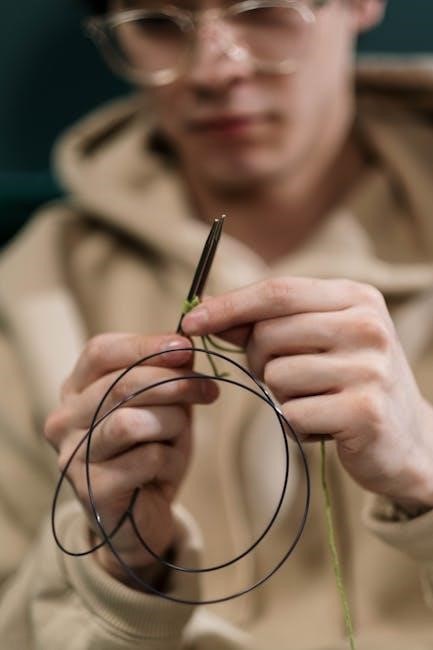
PDF instructions often begin with loom familiarization. Knowing your loom’s parts – pegs‚ base‚ and sometimes adjustable elements – is key for successful loom knitting.
Types of Looms (Round‚ Long‚ Small)
Loom knitting instructions for beginners PDF guides frequently detail various loom types. Round looms are ideal for hats and seamless tubes‚ offering a straightforward starting point. Long looms excel in creating flat panels perfect for scarves and blankets‚ often showcased in beginner PDFs.
Small looms‚ sometimes called mini looms‚ are fantastic for smaller projects like coasters or doll clothes. Many introductory PDFs demonstrate basic stitches on these smaller scales. Understanding the project’s shape dictates the best loom choice.
Beginner PDFs often include diagrams illustrating each loom type and its typical uses‚ helping new knitters select the appropriate tool for their first project.
Parts of a Loom
Loom knitting instructions for beginners PDF resources consistently emphasize understanding loom components. The core elements include the pegs‚ which hold the yarn and define stitch size‚ often detailed in diagrams within PDF guides.
A base secures the loom‚ providing stability during knitting‚ and is frequently illustrated in beginner PDFs. Some looms feature adjustable pegs‚ allowing for varied stitch widths‚ a feature explained in more advanced PDFs.
Many PDFs include labeled diagrams identifying each part‚ ensuring beginners can correctly assemble and utilize their loom. Familiarizing yourself with these parts is crucial for following loom knitting instructions effectively.
Choosing the Right Loom for Your Project
Loom knitting instructions for beginners PDF guides often dedicate sections to loom selection. Smaller looms are ideal for starting‚ allowing practice with basic stitches‚ as detailed in many introductory PDFs.
Round looms excel at creating hats and smaller circular items‚ frequently showcased in project-based PDFs. Longer looms are better suited for scarves and rectangular projects‚ with PDFs providing dimension guidance.
Consider yarn weight; bulky yarn requires larger pegs‚ a point emphasized in PDF resources. Beginner loom knitting instructions often recommend starting with a medium-sized loom for versatility.
Basic Loom Knitting Techniques
Loom knitting instructions for beginners PDF resources emphasize the e-wrap method for casting on and the knit stitch as foundational skills.
Mastering these techniques‚ often visually demonstrated in PDFs‚ unlocks a world of simple projects and creative possibilities.
Casting On – E-Wrap Method
Casting on with the e-wrap method is frequently detailed in loom knitting instructions for beginners PDF guides‚ as it’s incredibly accessible. This technique involves wrapping the yarn around each peg of your loom‚ creating a secure base for your project.
Many PDFs include clear diagrams and step-by-step photos illustrating how to consistently wrap the yarn‚ ensuring even tension. Beginners will find this method easier to grasp than other casting-on techniques.
The e-wrap creates a slightly bulkier edge‚ ideal for projects like scarves and hats. Practice is key; PDF resources often suggest repeating the process several times to build muscle memory and achieve a uniform cast-on edge. Consistent practice will lead to success!
Knit Stitch – The Foundation
Loom knitting instructions for beginners PDF resources universally emphasize the knit stitch as the foundational technique. Mastering this stitch unlocks a vast array of projects‚ from simple scarves to intricate patterns. The process involves lifting the bottom loop over the top loop on each peg‚ creating interlocking stitches.
PDF guides often feature detailed visuals‚ breaking down each step for clarity. Consistent tension is crucial; maintaining even pressure while lifting loops results in a neat‚ uniform fabric.
Beginners should practice the knit stitch repeatedly‚ focusing on rhythm and consistency. Many PDFs suggest starting with a small swatch to build confidence before tackling larger projects.
Purl Stitch – Adding Texture
Loom knitting instructions for beginners PDF materials often introduce the purl stitch after mastering the knit stitch‚ as it adds beautiful texture and variety. Unlike the knit stitch‚ the purl stitch creates a bumpy‚ reversed effect on the fabric. PDF guides illustrate how to lift the bottom loop under the top loop‚ rather than over‚ on each peg.
This seemingly small change dramatically alters the fabric’s appearance; Combining knit and purl stitches allows for ribbing and other textured patterns.
Practice is key; beginners may find the purl stitch initially awkward‚ but consistent practice‚ guided by PDF visuals‚ will build proficiency.

Loom Knitting Patterns for Beginners (PDF Resources)
Numerous free loom knitting instructions for beginners PDF patterns are available online‚ perfect for scarves and hats.
These PDF resources offer step-by-step guidance‚ making it easy to start your crafting journey.
Finding Free Loom Knitting PDF Patterns
Locating free loom knitting PDF patterns is surprisingly easy with a wealth of resources available online. Many websites and crafting communities offer downloadable patterns specifically designed for beginners. A quick search using keywords like “loom knitting instructions for beginners PDF” will yield numerous results‚ including patterns for scarves‚ hats‚ and simple blankets.
Websites like Ravelry often host user-submitted patterns‚ many of which are free. Additionally‚ YouTube channels dedicated to loom knitting frequently provide links to accompanying PDFs in their video descriptions. Don’t hesitate to explore blogs and online forums‚ as crafters often share their creations and patterns with the community. Remember to always check the licensing terms before using any downloaded pattern.
Popular Beginner Projects: Scarves
Scarves are an ideal first project for new loom knitters‚ offering a straightforward design and quick completion. Numerous free loom knitting instructions for beginners PDF patterns specifically target scarf creation‚ utilizing basic knit and purl stitches. These patterns often focus on the e-wrap method‚ simplifying the casting-on and knitting process.
Beginners can easily find PDFs demonstrating various scarf styles‚ from simple garter stitch designs to ribbed patterns. The repetitive nature of scarf knitting builds muscle memory and confidence. Experimenting with different yarn weights and colors adds a personal touch. Successfully completing a scarf provides a rewarding sense of accomplishment and a practical‚ wearable item!
Popular Beginner Projects: Hats
Hats represent another excellent starting point for loom knitting enthusiasts‚ with many free loom knitting instructions for beginners PDF resources available online. These patterns typically employ round looms‚ making the circular construction relatively simple to grasp. PDF guides often detail how to create basic beanies‚ utilizing knit and purl stitches to achieve different textures.
Beginners will find step-by-step instructions for casting on‚ knitting the body of the hat‚ and decreasing stitches to shape the crown. Variations include ribbed brims and pom-pom additions. Successfully loom knitting a hat builds skills applicable to more complex projects‚ offering both a functional item and a confidence boost.
Advanced Techniques & Resources
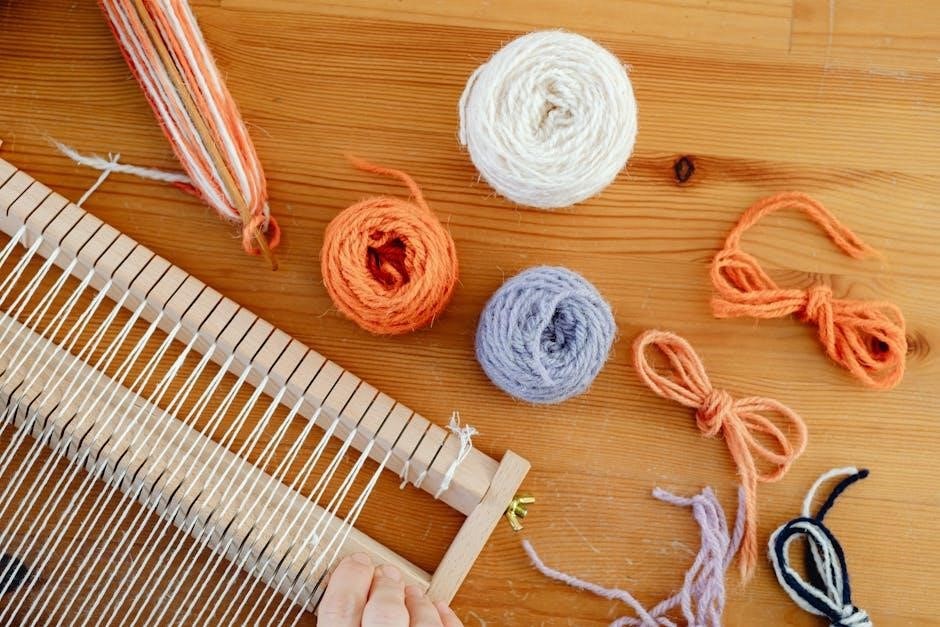
PDF resources extend beyond basics‚ offering instructions for colorwork and cables. Explore online tutorials and books to elevate your loom knitting skills further.
Colorwork on a Loom
Colorwork expands loom knitting possibilities‚ introducing vibrant designs and patterns. While initially appearing complex‚ PDF guides and video tutorials break down techniques for beginners.
These resources demonstrate how to manage multiple yarn colors effectively‚ creating stripes‚ fair isle‚ or intarsia patterns on your loom. Mastering color changes requires practice‚ but the visual impact is rewarding.
Begin with simple striped patterns‚ gradually progressing to more intricate designs as your confidence grows. Many free PDF patterns specifically showcase colorwork techniques‚ offering step-by-step instructions and visual aids.
Experiment with different color combinations and yarn weights to achieve unique textures and effects‚ transforming your loom knitting projects into personalized works of art.
Creating Cables
Creating cables on a loom introduces a classic knit texture‚ adding depth and visual interest to projects. While traditionally a needle-knitting technique‚ loom knitting adaptations are available through detailed PDF guides.
These resources illustrate how to manipulate stitches to create the twisted rope-like effect characteristic of cables. Beginners can start with simple two-stitch cables‚ gradually increasing complexity as skills develop.
PDF patterns often include clear diagrams and step-by-step instructions‚ making the process more accessible. Utilizing cable needles or specialized loom tools aids in holding stitches during the cable crossing process.
Practice and patience are key to mastering cable techniques‚ resulting in beautifully textured scarves‚ hats‚ and other loom knitted creations.
Understanding Knitters Math & Charts
Knitters Math & Charts are essential for customizing patterns and achieving desired project dimensions in loom knitting. Many comprehensive PDF resources dedicate sections to understanding gauge – stitches and rows per inch – crucial for accurate sizing.
These guides explain how to calculate stitch counts for different yarn weights and loom sizes‚ enabling adaptation of traditional knitting patterns. Charts visually represent stitch patterns‚ simplifying complex designs.
PDF downloads often include valuable reference charts for common stitch combinations and increases/decreases. Mastering these concepts empowers beginners to confidently modify patterns and create unique‚ well-fitting projects.
Understanding these fundamentals unlocks creative freedom and precision in loom knitting endeavors.

Troubleshooting Common Issues
PDF guides often address dropped stitches‚ uneven tension‚ and stuck looms – common hurdles for beginners.
Solutions and preventative measures are detailed‚ ensuring a smoother loom knitting experience.
Dropped Stitches
Dropped stitches are a frequent concern for new loom knitters‚ but easily remedied with guidance from beginner PDF instructions. These resources typically demonstrate how to carefully re-loop the yarn back onto the peg‚ effectively restoring the stitch.
Many PDF guides emphasize the importance of maintaining consistent tension to minimize dropped stitches. Visual aids‚ often included‚ illustrate the correct technique for picking up a dropped stitch using a crochet hook or even a spare peg.
Understanding the ‘e-wrap’ or ‘flat panel’ method‚ as detailed in these PDFs‚ can also prevent stitches from slipping off. Practicing with scrap yarn‚ guided by the instructions‚ builds confidence and skill in addressing this common issue.
Uneven Tension
Uneven tension is a common challenge for those new to loom knitting‚ but beginner PDF instructions often dedicate sections to mastering this skill. These guides highlight the importance of consistently wrapping the yarn around each peg with the same amount of force.
PDF resources frequently suggest practicing maintaining a relaxed grip on the yarn‚ avoiding pulling too tightly or leaving it too loose. Visual demonstrations within the instructions showcase the difference between even and uneven tension.
Many beginner workbooks recommend using a yarn guide or ring to help regulate yarn flow‚ contributing to more uniform stitch definition. Consistent practice‚ guided by the PDF‚ is key to achieving beautifully even fabric.
Looms Getting Stuck
Loom knitting PDF instructions for beginners frequently address the issue of pegs becoming stuck‚ a frustrating experience for newcomers. These guides emphasize the importance of using the correct yarn weight for your loom size; bulky yarn on a small loom is a common culprit.
PDF resources often suggest applying a small amount of silicone spray or beeswax to the pegs to reduce friction and facilitate smoother movement. They also advise against forcing the yarn‚ as this can damage the loom.
Detailed diagrams within the instructions illustrate proper yarn placement to prevent jamming‚ and troubleshooting tips guide users through gently freeing stuck pegs.
Resources and Further Learning
Loom knitting benefits from abundant online tutorials and PDF guides. Explore video links and recommended books to expand your skills beyond basic instructions.
Online Loom Knitting Tutorials (Video Links)
Loom knitting truly blossoms with visual learning! Numerous online platforms host fantastic tutorials‚ perfect for beginners seeking clear‚ step-by-step guidance. Many creators offer free content demonstrating fundamental techniques‚ like the e-wrap cast-on and basic knit stitch.
Search YouTube for “Loom Knitting 101” to find introductory videos‚ often accompanied by downloadable PDFs outlining the instructions. GoodKnit Kisses provides excellent tutorials paired with a dedicated workbook. These resources visually break down the process‚ making it easier to grasp the mechanics of loom knitting and confidently start your first project.
Don’t hesitate to explore various channels to find a teaching style that resonates with you!
Recommended Loom Knitting Books
While online resources are abundant‚ loom knitting books offer a curated and comprehensive learning experience. Many titles cater specifically to beginners‚ providing detailed instructions and a wealth of project ideas. Look for books that include clear photographs or illustrations alongside written explanations‚ enhancing understanding.
Consider titles that feature PDF patterns as supplementary material‚ allowing for easy printing and reference. These books often cover essential techniques‚ from casting on to binding off‚ and explore various stitch patterns. They can serve as a valuable companion to online tutorials‚ solidifying your skills and inspiring creativity.
A physical book provides a focused learning environment‚ free from online distractions!
Loom Knitting Communities & Forums
Connecting with fellow loom knitters through online communities and forums is invaluable‚ especially for beginners. These platforms offer a supportive environment to ask questions‚ share projects‚ and receive feedback. Many forums host dedicated sections for beginner assistance‚ providing access to helpful instructions and troubleshooting advice.
Members often share free PDF patterns and links to useful resources‚ expanding your project repertoire. Participating in these communities fosters learning and inspiration‚ allowing you to discover new techniques and approaches. Don’t hesitate to seek guidance or offer your own expertise – collaboration is key!
It’s a great way to learn beyond the PDF!

Project Ideas & Inspiration
PDF instructions unlock a world of projects! Begin with baby blankets‚ then explore socks and cowls‚ building skills with each delightful‚ achievable creation.
Loom Knit Baby Blankets
Loom knitting baby blankets is a fantastic first project! Numerous free PDF instructions are available online‚ guiding beginners through each step. These patterns often utilize the e-wrap method‚ making it simple to create soft‚ cozy blankets quickly.
Look for PDFs specifically designed for beginners‚ featuring clear photos and detailed explanations. Starting with a smaller blanket allows you to practice tension and get comfortable with the loom. Many patterns offer variations in color and stitch‚ allowing for personalized creations.
PDF resources often include stitch counts and loom size recommendations‚ ensuring a successful outcome. Baby blankets are a rewarding way to learn and create a cherished keepsake!
Loom Knit Socks
Loom knitting socks presents a slightly more advanced‚ yet achievable‚ project for beginners with some practice. While more complex than blankets‚ readily available PDF instructions break down the process into manageable steps. Look for patterns specifically designed for beginner sock knitters‚ often utilizing a small gauge loom.
PDF guides will detail heel and toe construction‚ crucial elements of sock making. Expect to learn techniques like decreasing stitches to shape the foot. Clear diagrams and photo tutorials within the PDF are essential for understanding these steps.
Starting with a simple ankle sock is recommended before tackling longer designs. Patience and practice‚ guided by detailed PDFs‚ will lead to cozy‚ handmade socks!
Loom Knit Cowls
Loom knit cowls are fantastic beginner projects‚ offering quick gratification and simple construction. Numerous free PDF patterns cater specifically to those new to loom knitting‚ providing clear‚ step-by-step instructions. These PDFs typically utilize basic knit and purl stitches‚ easily mastered with practice.
Circular looms are ideal for creating seamless cowls‚ eliminating the need for joining pieces. PDF guides will illustrate how to cast on‚ knit the desired length‚ and bind off securely. Experiment with different yarn weights and colors to personalize your cowl.
Look for PDFs with accompanying video tutorials for visual learners‚ enhancing understanding and confidence; Cowls are a stylish and practical introduction to the craft!

Converting Traditional Knitting Patterns
PDF resources demonstrate adapting standard knit patterns for loom knitting‚ focusing on stitch gauge and necessary adjustments for successful project completion.
Adapting Knit Patterns for Loom Knitting
Loom knitting requires thoughtful conversion from traditional patterns‚ primarily due to differing stitch structures. PDF guides often illustrate how to translate knit and purl stitches to the e-wrap method‚ the foundation of most loom knitting.
Understanding row and round counts is crucial; loom projects often work in rounds rather than traditional rows. Adjustments are needed for shaping‚ such as increases and decreases‚ as loom techniques differ.
Beginners benefit from starting with simple patterns and utilizing PDF resources that provide clear‚ step-by-step instructions for converting basic knit stitches. Careful attention to gauge is essential for achieving the desired size and fit in your finished project.
Stitch Gauge Considerations
Stitch gauge is paramount when adapting patterns‚ as loom knitting often yields a different fabric density than traditional knitting. PDF resources emphasize creating a gauge swatch to determine stitches and rows per inch on your specific loom and yarn.
Comparing your swatch to the pattern’s gauge is vital; discrepancies necessitate adjusting the number of pegs used or yarn weight. A tighter gauge requires fewer pegs‚ while a looser gauge may need more.
Beginners should prioritize understanding gauge before embarking on larger projects‚ utilizing PDF instructions to accurately measure and adjust for optimal results. Accurate gauge ensures your finished piece matches the intended size and shape.
Loom Knitting with Different Yarns
PDF guides detail yarn weight compatibility; bulky yarns work well for quick projects‚ while lightweight yarns require careful tension.
Experimentation is key to mastering various yarn types on your loom!
Best Yarn Weights for Loom Knitting
Beginner loom knitters often find success starting with bulky or super bulky yarn (weight 5 or 6) as these create quicker projects and are easier to manipulate on the loom; The larger yarn size makes stitch definition more visible‚ aiding in learning the fundamental techniques.
Worsted weight yarn (weight 4) is also a popular choice‚ offering a balance between speed and detail. Many PDF instructions are designed specifically for this weight. Lightweight or fingering weight yarns (weights 1-3) can be used‚ but require more patience and a finer gauge loom‚ potentially posing a challenge for newcomers.
Always check the PDF pattern or tutorial for the recommended yarn weight to ensure optimal results and a satisfying loom knitting experience.
Working with Bulky Yarn
Bulky yarn is exceptionally forgiving for beginner loom knitters‚ making it ideal for initial projects. Many free PDF instructions showcase simple patterns designed for this weight‚ like scarves and cowls. Its thickness allows for rapid project completion‚ providing quick gratification and building confidence.
When using bulky yarn‚ ensure your loom has sufficient peg spacing to accommodate the yarn’s volume. Tightly wrapped stitches are key to preventing a loose fabric. Refer to PDF guides for specific wrapping techniques.
Remember to adjust tension; bulky yarn requires a firmer hand to maintain stitch integrity. Explore online tutorials for visual guidance on working with this yarn weight.
Working with Lightweight Yarn
Lightweight yarn presents a unique challenge for beginner loom knitters‚ requiring more precision than bulkier options. While more intricate‚ numerous PDF instructions are available for delicate projects like shawls or baby items. Success hinges on consistent tension and careful wrapping of each peg.
Select a loom with closely spaced pegs to achieve a denser fabric. PDF guides often demonstrate modified wrapping techniques – such as the figure-eight wrap – to secure finer yarns.
Online tutorials are invaluable for visualizing these techniques. Be patient‚ as lightweight yarn demands practice‚ but the resulting fabric is beautifully soft and drapey.